The Gyalwang
Karmapa’s Special Address to the Kagyu Monlam
January
11, 2009, Translated by Karma Choephel
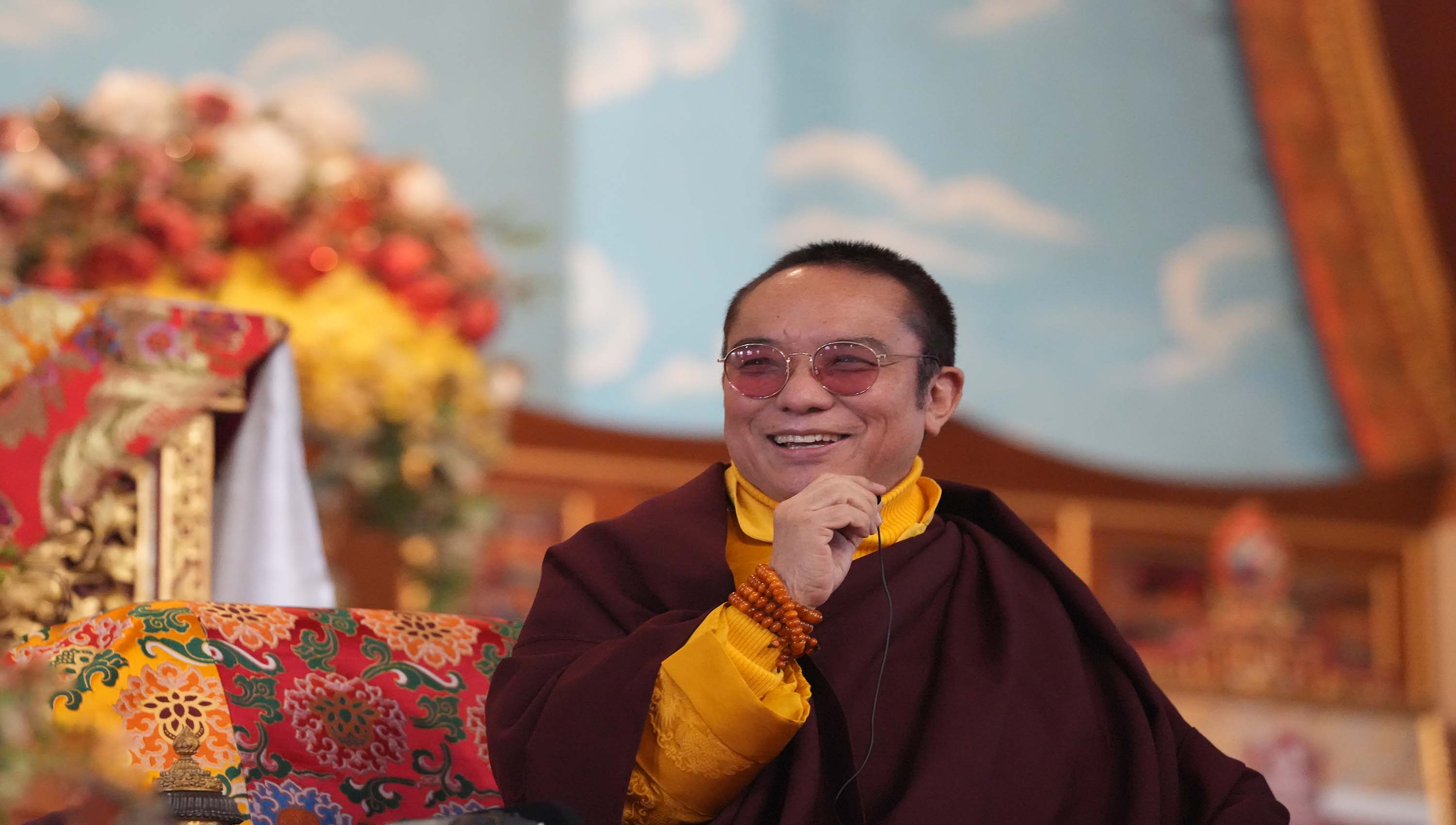
I have
the opportunity to give a special address today, but I
do not have anything special to say. Maybe all the
special topics have been used up. Last year I took the
opportunity to say some things about environmental
protection, and the year before that I had the chance to
talk about giving up meat and being vegetarian. Everyone
has really taken a lot of interest in these issues. With
the issue of vegetarianism, it has not been just the
Tibetan monasteries in India and Nepal. Many monasteries
of all lineages in Tibet itself have actually
implemented a vegetarian diet. This deserves accolades.
I feel that interest in environmental protection is also
growing. Students from abroad in particular have taken a
special interest in this issue. They have made plans for
environmental protection, and are putting a great deal
of effort into implementing them. This is very good, and
I would like to thank everyone for this. But you don’t
need to clap!
This year I don’t have any particular issue to address.
If I say something special every year, you might pay
attention to it, but if I were to say something every
year it would no longer be special. It would become
normal, and then we might not emphasize putting it into
practice. Since that is a possibility, I will not say
much.
Last year I did speak about the environment. The climate
has changed and temperatures worldwide are unbalanced.
The ice packs at the earth’s poles are melting and the
weather is getting warmer in Tibet. We are approaching a
critical situation. This is not going to affect only one
ethnic group or one country; It will impact the fate of
the entire globe, so we all need to work together. It is
very important that we educate ourselves as much as
possible, and that we take greater interest in the
current scientific thinking on climate change and
environmental protection.
In Tibet, we have passed down our own particular methods
of environmental protection from generation to
generation. This is very good. However, there might be
some people who have a basic interest in environmental
protection, but lack adequate education as to the best
ways to protect the environment in a particular time and
place. This is why we need to emphasize education and
interest in contemporary sciences, particularly
environmental science. This is an unmatched opportunity
to do something beneficial for Buddhism and sentient
beings in general. Since we live in this time, we need
to make real efforts at this.
In particular, I have produced a book of guidelines for
environmental protection that will be distributed to all
the monasteries once the Tibetan translation has been
completed. It has been finished in English and Chinese,
and there are plans to produce it in other languages as
well. Once this is done, all the monasteries, dharma
centers, associations and individuals in the different
countries of the world should motivate themselves to do
something about this situation that is threatening the
world. There is no better Dharma practice than doing
something good for all the beings who live and depend on
this world. From a worldly perspective as well, this is
a critical life-and-death situation. Please keep this in
mind. This is my first point.
My second point concerns the five-minute meditations we
held during the Milarepa teachings over the past few
days. Actually, if you have never been instructed in
meditation and then are told to meditate, it must be a
bit difficult. But if you call yourself a member of the
practice lineage, you should be someone who puts their
main emphasis on meditation practice. If we merely claim
to be in the practice lineage verbally, without giving
any appearance of doing any meditation or practice, we
are disgracing the lineage that among all lineages is
supposed to be the most practice-oriented. Members of
the practice lineage should have minds that are somewhat
tamed or that settle peacefully, but we don’t seem to be
like that. For that reason, it would be good for all the
different monasteries to plan to make time in their
daily schedules for some meditation—at least five
minutes.
All the monasteries have many lamas who have completed
retreats, and these lamas should be put to use. Of
course we need to help those abroad, but we should also
help all the Tibetans, Nepalis, and Indians. It is not
OK to just follow the money. Thus the better among the
lamas who have completed retreats should give daily
instructions in meditation. They may teach meditation on
the four thoughts that turn the mind or on something
else, but at the very least there should be five minutes
of meditation per day. If this happens and we have the
opportunity to gather for another Kagyu Monlam, I hope
that your posture and physical appearance will be better
during the meditation. I hope it does not get worse. We
will be able to tell if you have been meditating
regularly. If when I look out at you I think, “They are
really meditating,” that is a sign that you have been
meditating regularly. On the other hand, if when I look
out you are not sitting in the posture of a meditator
but slouching like a sleepyhead, that is a sign that
things have not gone so well. So it would be good to
include this in your daily schedule. After all, we are a
practice lineage. There is no point to just carrying the
empty name of a “practice lineage.” Thus putting a
strong emphasis on practice and meditation is the second
point.
For the third point, during the work leading up to the
Kagyu Monlam, I have had many opportunities to interact
with many young monks. We have quite a few young monks
and nuns who are very intelligent and know how to use
their brains. But we are not used to using our brains
and so we do not give them any training or chance to
develop their skills. If we let them remain ignorant
fools, it seems to me that their human lives will be
wasted, so we should give them education. If they
normally work in the monasteries or perform a job that
is connected with the Dharma, we should help them
develop their skills and creativity, and they will know
better how to do their jobs.
If monks and nuns do not know how to do anything in the
monastery, we should not look down on them. If we give
them skills and jobs instead, these young monks and nuns
will not go to waste. They will be able to have an
education and skills in this life, and this will also
help Buddhism and the monasteries. For this reason, all
the monasteries should take an interest in education.
This should be in Buddhism—even if only the four
thoughts that turn the mind and the stages of the
path—and also in languages such as English, Hindi, and
others. We are a Mahayana sangha, so we need to work to
help the teachings and beings, and in particular work on
behalf of people of many different inclinations and
ethnicities. If we intend to bring vast benefit to
beings and the teachings, we will need to employ various
different methods, approaches and activities. It would
not work just to follow traditional customs. For this
reason, everyone should take an interest in education
and develop the skills of the monks and nuns in all the
monasteries. It’s good to make them use their brains,
isn’t it? They should not just be left behind like
sheep. This is the third point. I don’t have anything
else in particular to say.
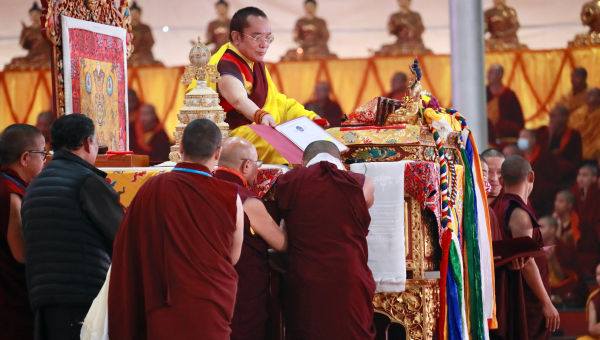
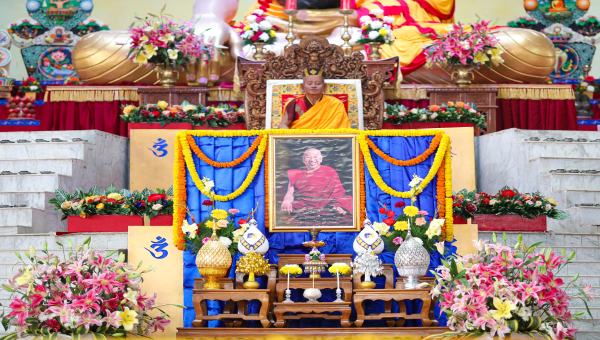
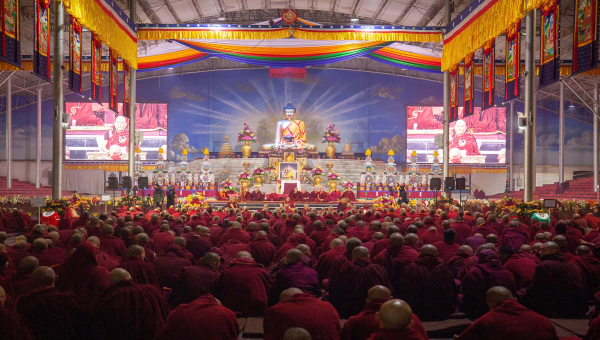
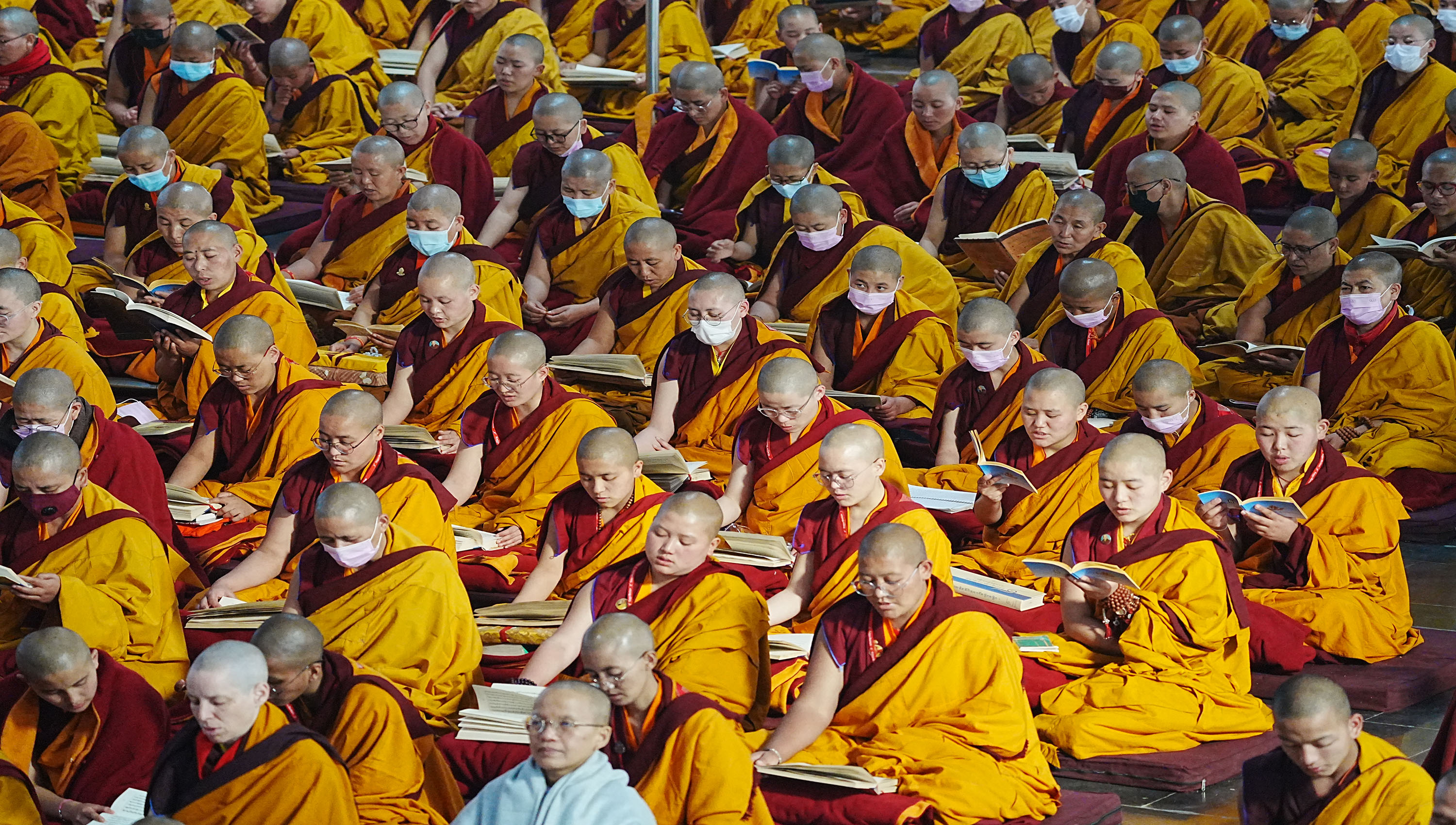
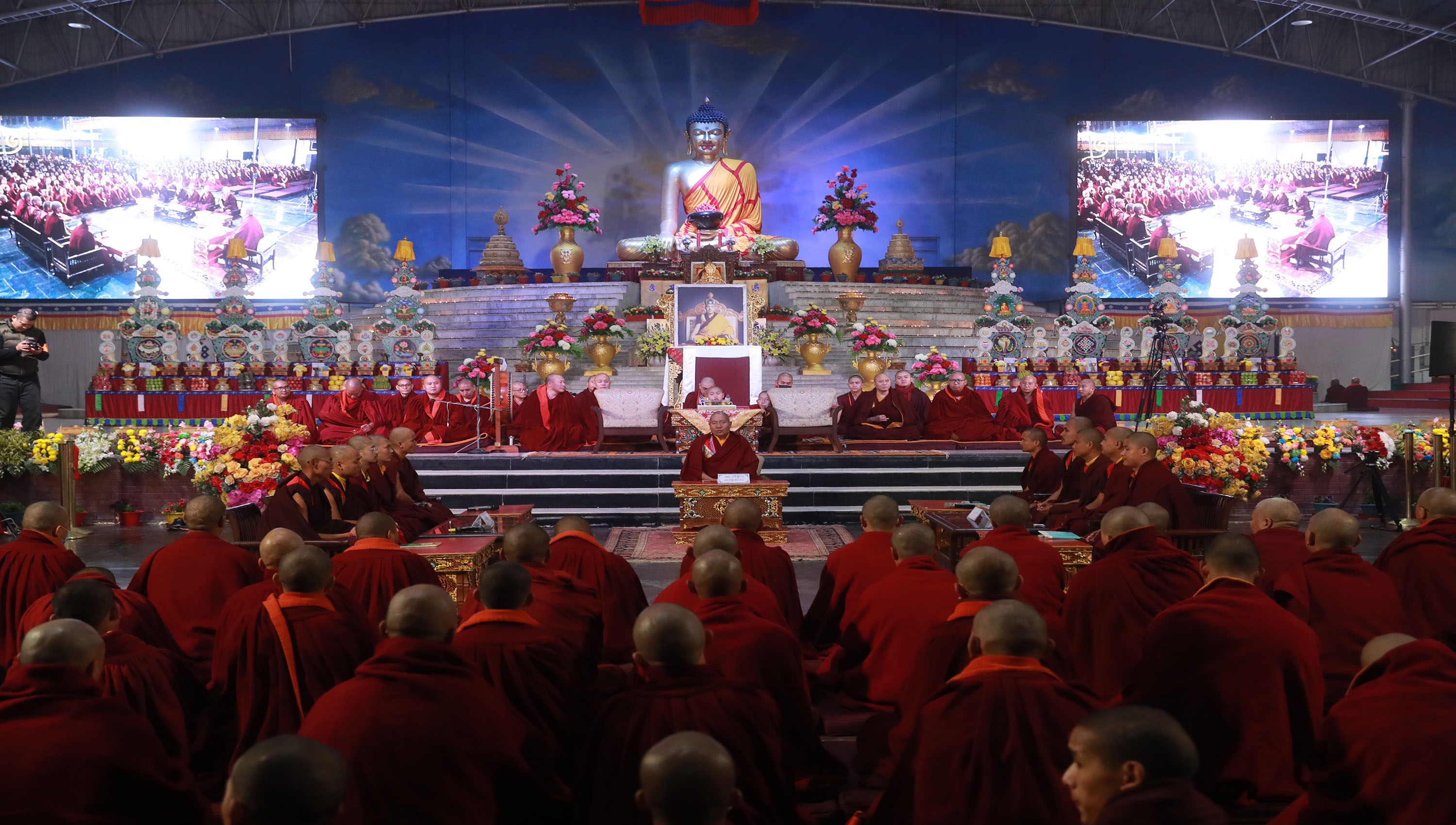
Finally, today we are bringing the 26th Kagyu Monlam to
a successful conclusion, so we should dedicate the
virtue we have created during it. We should make the
aspiration that this virtue become the seed of peace and
happiness for all the limitless beings throughout space,
and that it become a cause that increases and gives
power to our love and affection. In particular, we
should keep in mind those beings to whom we are directly
connected, the beings who live on this planet, and
dedicate the virtue we have done to them. We should make
the vast aspiration that they may receive this just as
we have dedicated it.
As I explained yesterday, if we foster the precious
teachings of Buddhism in a dharmic way, they are the
source of happiness for wandering beings. But if we mix
the Buddhist teachings with excessive clinging to our
own views and practices as best or with attachment,
aversion, or delusion, there is the danger that will
cause us to lose this root of help and happiness. For
that reason, if you are a fully renounced monastic, a
Buddhist, or a practitioner, you should keep that in
mind without ever forgetting it. Our biggest fault is
that we get into dire straits and forget that we are
monastics, Buddhists, and practitioners, and then
display all the worst traits of our characters.
Therefore we need to continually recognize who we are,
without ever forgetting. This is extremely important.
The Buddhist teachings from Tibet have been seriously
threatened in terms of study, practice and activity.
They are good in general, but many aspects have
deteriorated, so please pray that through the power of
these roots of virtue what has deteriorated may be
revived and what has not been harmed may flourish.
Similarly the great Buddhist master, His Holiness the
Dalai Lama, has been ill a few times recently. This is a
sign that we need to heighten our alertness. Thus we
should pray fervently that all the great beings live
long, benefit many sentient beings, and turn the wheel
of Dharma.
The foundation of the teachings is the Sangha, but in
Tibetan society we do not really seem to hold the Sangha
in high regard. In Thailand, Taiwan, and other Buddhist
countries, members of the Sangha are highly respected.
People treat them reverentially, and join their palms in
prayer to them. But we Tibetans treat them as equals. We
pay great respect to the rinpoches, tulkus, supreme
nirmanakayas, great masters and kings of dharma, but do
not really understand that the Sangha under them is the
foundation and root of the teachings. Yet this
understanding is very important. Although the custom of
recognizing the upholders of the teachings as tulkus
appeared in Tibet, generally in terms of the system of
the teachings of the Bhagavan Buddha, it is the Sangha
as a whole that upholds the Buddha’s teachings, not
individuals. It is the community of the Sangha that
upholds the teachings. So may the Sangha of the ten
directions be harmonious and well disciplined. In
particular, as I said the other day, the Tibetan
lineages are all one teaching with many different
methods. We need to recognize them as all being one. It
is very important that we have unmistaken faith in and
samaya with the upholders of these teachings. For that
reason, please pray for them.
This year there have been terrible situations, such as
the disturbances in Tibet, the earthquake in China, many
people dying in the natural disaster in Burma, and many
people unexpectedly losing their lives in from the
terrorism in Mumbai. In Bihar as well, many people died
in the flooding. Please keep these beings and the
suffering of all beings in your mind as you make the
dedications.